
Throat cancer is a serious medical condition that affects thousands of people worldwide each year. Early detection plays a critical role in improving survival rates and treatment outcomes. Understanding Throat Cancer Symptoms, recognizing early warning signs, and knowing when to seek medical attention can make a life-saving difference.
This in-depth guide explains throat cancer in simple terms, covering symptoms, causes, risk factors, diagnosis, treatment options, and the importance of early intervention.
What Is Throat Cancer?
Throat cancer refers to malignant tumors that develop in the pharynx (throat), larynx (voice box), or tonsils. It is often grouped under head and neck cancers. The disease can affect speaking, swallowing, and breathing if not detected early.
While throat cancer can occur at any age, it is more common in adults over 40, particularly those with specific lifestyle risk factors.
Understanding Throat Cancer Symptoms
One of the biggest challenges with throat cancer is that early symptoms are often subtle and mistaken for common throat infections or allergies. Persistent symptoms lasting more than two weeks should never be ignored.
Some early throat cancer symptoms may appear mild but gradually worsen over time.
Early Signs You Should Never Ignore
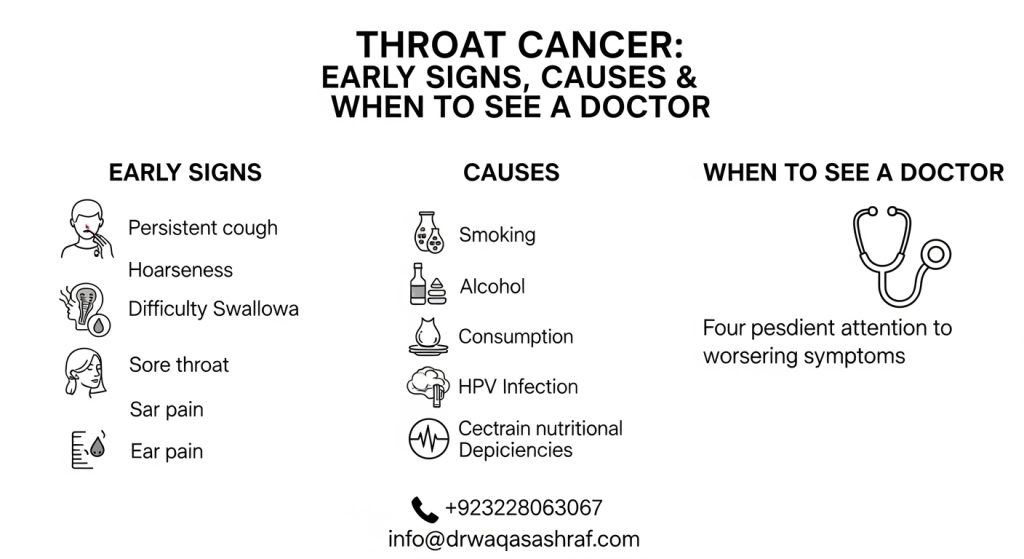
Early detection saves lives. The most common early warning signs include:
- Persistent sore throat that does not improve
- Difficulty swallowing or a feeling of something stuck in the throat
- Hoarseness or voice changes lasting longer than two weeks
- Unexplained weight loss
- Ear pain without infection
Recognizing throat cancer symptoms early allows for timely diagnosis and more effective treatment.
Advanced Throat Cancer Symptoms
As the disease progresses, symptoms may become more severe and noticeable:
- Chronic cough or coughing up blood
- Breathing difficulties
- Swelling or lump in the neck
- Severe pain while swallowing
- Persistent bad breath
At advanced stages, throat cancer can significantly affect daily life and overall health.
Common Causes of Throat Cancer
Several factors contribute to the development of throat cancer. Understanding these causes can help with prevention and early screening.
1. Tobacco Use
Smoking cigarettes, cigars, or using smokeless tobacco is the leading cause of throat cancer.
2. Alcohol Consumption
Heavy and prolonged alcohol use significantly increases cancer risk, especially when combined with smoking.
3. HPV Infection
Human Papillomavirus (HPV), particularly HPV-16, is strongly linked to throat and tonsil cancers.
4. Poor Diet
A diet low in fruits and vegetables may weaken the immune system, increasing cancer risk.
Risk Factors You Should Know
You may be at higher risk if you:
- Smoke or chew tobacco
- Consume alcohol regularly
- Have HPV infection
- Are exposed to harmful chemicals
- Have a family history of cancer
It’s important to remember that not everyone with risk factors develops cancer, but awareness is essential.
Throat Cancer vs Other Cancer Symptoms
Cancer symptoms can vary depending on the affected area. For example, some people worry about unrelated pain, asking questions like is heel pain a sign of cancer. While heel pain is usually linked to orthopedic or nerve issues, persistent unexplained pain anywhere in the body should always be medically evaluated.
Similarly, oral cancers often present as tongue cancer symptoms, including mouth sores, tongue pain, or difficulty speaking, which may overlap with throat cancer warning signs.
Tongue and Throat Cancer: Key Differences
While closely related, tongue and throat cancers have distinct characteristics.
Common tongue cancer symptoms include:
- Persistent tongue sores
- Red or white patches
- Pain while chewing or speaking
Early identification of tongue cancer symptoms can prevent progression into more advanced disease stages affecting the throat.
How Throat Cancer Is Diagnosed
Doctors use several diagnostic methods to confirm throat cancer:
- Physical examination of the throat and neck
- Endoscopy to view the throat internally
- Biopsy to test tissue samples
- Imaging tests like CT scans or MRIs
Accurate diagnosis helps determine cancer stage and treatment options.
Stages of Throat Cancer
Throat cancer is classified into stages from I to IV:
- Stage I–II: Cancer is localized and easier to treat
- Stage III: Cancer spreads to nearby tissues
- Stage IV: Advanced cancer that may spread to distant organs
Late-stage cancer can sometimes progress to terminal cancer, where treatment focuses more on comfort and quality of life.
Treatment Options for Throat Cancer
Treatment depends on cancer stage, location, and overall health of the patient.
1. Surgery
Removal of the tumor and surrounding tissue.
2. Radiation Therapy
Uses high-energy beams to destroy cancer cells.
3. Chemotherapy
Uses drugs to kill or stop cancer cell growth.
4. Targeted Therapy
Attacks cancer cells without harming normal cells.
Early treatment significantly improves survival rates.
Life After Throat Cancer Treatment
Recovery varies depending on treatment intensity. Patients may experience:
- Temporary voice changes
- Difficulty swallowing
- Fatigue
- Nutritional challenges
Speech therapy, nutritional counseling, and regular follow-ups are crucial for long-term recovery.
When to See a Doctor
You should consult a healthcare professional immediately if you experience:
- Persistent throat cancer symptoms lasting over two weeks
- Difficulty swallowing or breathing
- Unexplained weight loss
- Neck lumps or chronic hoarseness
Early medical consultation can prevent disease progression.
Emotional and Psychological Impact
Cancer diagnosis affects mental health as much as physical health. Anxiety, depression, and fear are common, especially in advanced stages such as terminal cancer.
Support groups, counseling, and family support play an essential role in emotional recovery.
Prevention Tips for Throat Cancer
While not all cases are preventable, you can reduce risk by:
- Avoiding tobacco and alcohol
- Maintaining good oral hygiene
- Getting vaccinated against HPV
- Eating a balanced diet rich in fruits and vegetables
Regular medical checkups also help detect abnormalities early.
Myths and Misconceptions
There are many misconceptions surrounding cancer. Some people rely on non-medical sources like cancer daily horoscope in urdu, which should never replace professional medical advice. Cancer diagnosis and treatment must always be guided by qualified healthcare professionals.
Importance of Awareness and Early Detection
Public awareness about Throat Cancer Symptoms can significantly reduce mortality rates. Early-stage throat cancer has a much higher survival rate than advanced disease.
Knowing symptoms, causes, and risk factors empowers individuals to take proactive steps toward their health.
Final Thoughts
Throat cancer is a serious but treatable condition when detected early. Paying attention to persistent symptoms, understanding risk factors, and seeking timely medical care can save lives.
If you or a loved one experiences ongoing throat cancer symptoms, do not delay seeking professional help. Early diagnosis offers the best chance for successful treatment and long-term recovery.