
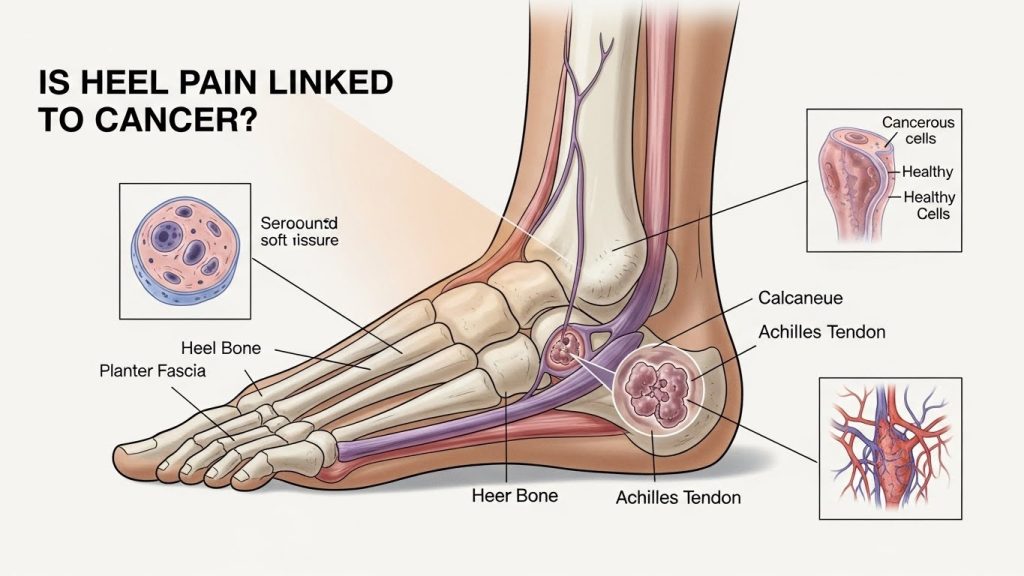
Heel pain is one of the most common complaints seen in orthopedic and general medical clinics. From athletes and office workers to elderly individuals, many people experience heel discomfort at some stage of life. While most cases are harmless and related to foot mechanics, some patients worry about serious illnesses and often ask: is heel pain a sign of cancer?
Dr Waqas Ashraf, a medical expert with extensive experience in musculoskeletal and chronic pain conditions, explains that heel pain is rarely associated with cancer. However, understanding when pain is harmless and when it requires deeper investigation is essential for both physical health and peace of mind.
This article provides a clear, science-based explanation of heel pain, explores its possible links to cancer, and helps you recognize warning signs that should never be ignored.
Understanding Heel Pain: Why It’s So Common
The heel bears the entire body weight during standing, walking, and running. Because of this constant stress, the heel is vulnerable to inflammation, strain, and injury. Heel pain usually develops due to everyday factors rather than serious disease.
Common characteristics of typical heel pain include:
- Pain when standing after rest
- Discomfort after prolonged walking
- Relief with rest or medication
- Gradual improvement with treatment
In such cases, cancer is not a concern.
Is Heel Pain a Sign of Cancer? A Medical Perspective
From a clinical standpoint, is heel pain a sign of cancer is a question driven more by anxiety than statistics. Dr Waqas Ashraf emphasizes that cancer-related heel pain is extremely uncommon.
Cancer does not usually originate in the heel. When cancer causes pain in the foot or heel, it typically occurs due to:
- Bone metastasis
- Advanced systemic disease
- Nerve involvement from spinal tumors
In nearly all such cases, heel pain is not the first or only symptom.
Most Common Non-Cancerous Causes of Heel Pain
Before assuming a serious illness, it’s important to understand the usual causes of heel pain that doctors diagnose every day.
Plantar Fasciitis
This is the most frequent cause of heel pain. It occurs due to inflammation of the plantar fascia ligament and causes sharp pain, especially in the morning.
Achilles Tendinitis
Inflammation of the Achilles tendon leads to pain at the back of the heel, particularly in runners or physically active individuals.
Heel Spurs
Calcium deposits on the heel bone can cause discomfort, often alongside plantar fasciitis.
Nerve Compression
Pinched nerves from the ankle or lower back can radiate pain into the heel.
All of these conditions are treatable and non-cancerous.
When Heel Pain Becomes a Medical Red Flag
Although heel pain is usually harmless, Dr Waqas Ashraf advises medical evaluation if pain is accompanied by warning signs such as:
- Pain that worsens at night
- Unexplained weight loss
- Persistent swelling
- Fever or fatigue
- Pain unrelated to movement
- History of cancer
These signs don’t confirm cancer but signal the need for further testing.
How Cancer Can Indirectly Cause Heel Pain
Cancer rarely presents as isolated heel pain, but certain mechanisms may involve the heel in advanced cases.
Bone Metastasis
Cancers such as breast, prostate, and lung cancers can spread to bones. In rare cases, the heel bone may be affected, causing deep, persistent pain.
Doctors often investigate types of lung cancer because lung malignancies are among the most common to spread to bone tissue.
Blood Cancers
Leukemia and multiple myeloma can weaken bones and cause pain in unusual locations, including the heel.
Nerve Involvement
Tumors in the spine can compress nerves that travel down to the foot, leading to referred heel pain.
Heel Pain vs Cancer Pain: Key Differences
Understanding how cancer pain behaves can help reduce fear.
| Heel Pain (Benign) | Cancer-Related Pain |
|---|---|
| Improves with rest | Persistent, progressive |
| Worse with activity | Worse at night |
| Responds to medication | Poor response to painkillers |
| Localized pain | Often widespread |
If your heel pain improves with conservative care, cancer is extremely unlikely.
Why Heel Pain Alone Is Rarely Cancer
Dr Waqas Ashraf explains that cancer usually causes multiple symptoms. Heel pain alone, without systemic signs, does not fit the typical cancer pattern.
Patients with cancer often experience:
- Severe fatigue
- Appetite loss
- Night sweats
- Multiple areas of pain
Heel pain as the only complaint is almost never cancer-related.
Relation to Other Cancer Symptoms
Doctors also assess whether heel pain is accompanied by symptoms elsewhere in the body, such as:
- throat cancer symptoms like difficulty swallowing, hoarseness, or neck lumps
- tongue cancer early symptoms such as persistent mouth sores or tongue pain
- Chronic cough or chest pain
The presence of such symptoms may guide further investigation.
The Role of Medical Testing
When heel pain is persistent or unusual, doctors may recommend:
- X-rays to detect bone abnormalities
- MRI scans for soft tissue and marrow
- Blood tests to check inflammatory markers
- Bone scans if cancer is suspected
These tests help rule out serious conditions and provide reassurance.
Cancer Anxiety and Online Misinformation
Many patients panic after reading online content or non-medical sources such as a cancer daily horoscope in urdu. Dr Waqas Ashraf strongly advises against using astrology or social media for health diagnosis.
Only qualified medical professionals and evidence-based tests can determine the true cause of pain.
Heel Pain in Advanced Cancer
In late-stage disease, pain can occur throughout the body. However, isolated heel pain is not typical of terminal illness. Patients with terminal cancer usually have widespread symptoms affecting multiple organs.
This distinction is important to prevent unnecessary fear.
Managing Heel Pain Effectively
Most heel pain can be managed with:
- Supportive footwear
- Stretching exercises
- Weight management
- Anti-inflammatory medication
- Physical therapy
Early treatment leads to faster recovery and prevents chronic issues.
When to Seek Immediate Medical Advice
You should consult a doctor if:
- Heel pain lasts longer than one month
- Pain is worsening despite treatment
- You experience night pain or swelling
- You have a personal cancer history
Prompt evaluation ensures accurate diagnosis and peace of mind.
Dr Waqas Ashraf’s Professional Opinion
According to Dr Waqas Ashraf, most patients who fear that is heel pain a sign of cancer can be reassured after proper examination. The key is awareness without panic.
Medical science consistently shows that heel pain is overwhelmingly caused by benign conditions.
Final Thoughts
Heel pain is uncomfortable, frustrating, and common—but it is rarely dangerous. While cancer can cause bone pain, it almost never presents as isolated heel pain without other symptoms.
Understanding your body, recognizing warning signs, and seeking timely medical advice are the best ways to stay healthy and informed. With expert guidance from Dr Waqas Ashraf, patients can address heel pain confidently and focus on recovery rather than fear.